Creme Brûlée Cookies with Burnt Sugar
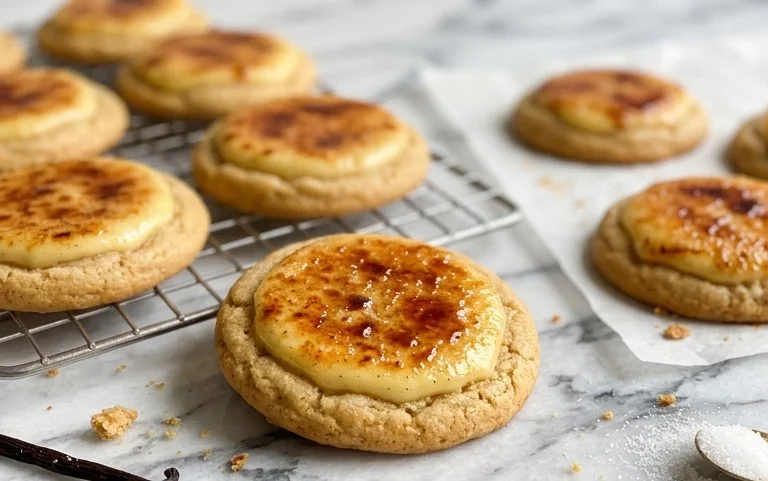
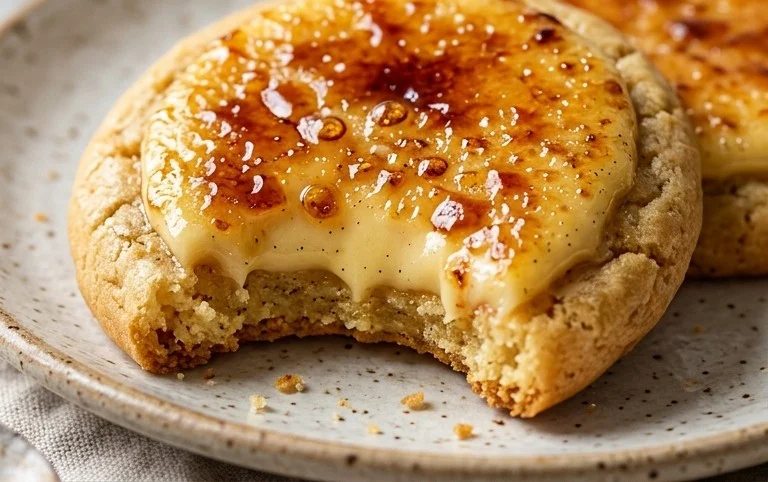
Creme Brûlée Cookies bring the best of both worlds together. You get the satisfying crack of caramelized sugar that’s famous in the dessert, but in a portable cookie form. My favorite part is the little crunch from the sugar on top, followed by a tender cookie underneath. It feels fancy without being complicated. These cookies are perfect for when you want something special for a dessert tray, a holiday gathering, or just a weekend treat that feels a little more grown-up. We’re making two main parts: a rich, smooth pastry cream and a sturdy, buttery cookie dough. The pastry cream is the heart of the flavor, and the cookie dough provides the perfect vehicle. Getting that signature burnt sugar top is surprisingly simple once you know how. This recipe guides you through making both components so you can assemble your own Creme Brûlée Cookies.
Ingredients:
- 2 1/4 cups (540 ml) whole milk
- 6 egg yolks
- 1 cup + 2 tbsp (225 g) granulated white sugar
- 1/8 tsp salt
- 1 1/2 tbsp vanilla bean paste
- 3 1/2 tbsp (28 g) cornstarch
- 3 tbsp (42 g) unsalted butter, cut in cubes
- 2 1/2 cups (313 g) all-purpose flour, spooned and leveled
- 1/2 tsp baking powder
- 1/2 tsp salt
- 1 1/4 cup (250 g) granulated white sugar
- 1 cup (224 g) unsalted butter, softened
- 1 egg
- 1 tbsp vanilla bean paste
- 1/2 cup (100 g) granulated white sugar (for rolling the dough in)
Crème Brûlée Cookie Dough
These cookies capture the essence of classic crème brûlée in a delightful, portable form. The magic happens when you get that satisfying crack on top from the caramelized sugar, mirroring the iconic burnt sugar crust of the dessert. We’ll make two main components: a rich pastry cream filling and a sturdy, buttery cookie dough.
Pastry Cream Filling
- In a medium saucepan, gently heat the whole milk over medium heat until it’s just simmering around the edges. Don’t let it come to a rolling boil. While the milk is heating, whisk together the 6 egg yolks, 1 cup + 2 tbsp granulated white sugar, and 1/8 tsp salt in a heatproof bowl. Whisk this mixture until it’s pale yellow and slightly thickened.
- Once the milk is hot, gradually temper the egg yolk mixture. This is a crucial step to prevent the eggs from scrambling. Ladle about half a cup of the hot milk into the egg yolk mixture, whisking constantly. Then, pour this tempered egg mixture back into the saucepan with the remaining hot milk, continuing to whisk.
- Cook the custard over medium-low heat, stirring constantly with a wooden spoon or spatula, until it thickens enough to coat the back of the spoon. This usually takes about 5-8 minutes. Don’t rush this process; a gentle heat is key. Once thickened, remove the saucepan from the heat and stir in the 1 1/2 tbsp vanilla bean paste and the cornstarch. The cornstarch helps to ensure a smooth and stable cream. Whisk thoroughly to ensure there are no lumps.
- Transfer the pastry cream to a clean bowl. Cover the surface directly with plastic wrap, pressing it down so it touches the cream. This prevents a skin from forming. Let it cool at room temperature for about 30 minutes, then refrigerate for at least 2 hours, or until completely chilled and firm. You can make this filling a day in advance.
Cookie Dough Assembly
- In a large bowl, cream together the softened unsalted butter (1 cup) and the 1 1/4 cup granulated white sugar until light and fluffy. This can take about 3-5 minutes with an electric mixer. Ensure your butter is truly softened, not melted.
- Beat in the egg and the 1 tbsp vanilla bean paste until well combined. Scrape down the sides of the bowl to make sure everything is incorporated evenly.
- In a separate medium bowl, whisk together the all-purpose flour, baking powder, and 1/2 tsp salt. Gradually add the dry ingredients to the wet ingredients, mixing on low speed until just combined. Be careful not to overmix the dough at this stage, as it can make the cookies tough.
- The dough will be quite soft. Cover the bowl with plastic wrap and refrigerate for at least 1 hour, or until it’s firm enough to handle. This chilling time is essential for the dough to become workable and to prevent the cookies from spreading too much.
Assembling and Baking the Crème Brûlée Cookies
Now that our components are ready, it’s time to bring them together and get them into the oven. The shape of these cookies is important for achieving that signature crème brûlée look.
- Preheat your oven to 350°F (175°C). Line baking sheets with parchment paper.
- Take about half of the chilled cookie dough and place it on a lightly floured surface. Roll it out to about 1/4-inch thickness. Use a round cookie cutter (about 2.5 to 3 inches in diameter) to cut out circles. You will need two circles for each cookie: one for the bottom and one for the top.
- Scoop about 1-2 tablespoons of the chilled pastry cream and spread it evenly over the center of one cookie circle, leaving about a 1/4-inch border. This amount will depend on the size of your cookies; you want enough to create a good filling without it oozing out excessively.
- Carefully place a second cookie circle on top of the pastry cream. Gently press the edges together to seal the pastry cream inside. You can use a fork to crimp the edges for a decorative finish and to ensure a good seal. Repeat this process with the remaining dough and pastry cream.
- In a shallow dish, place the 1/2 cup granulated white sugar for rolling. Gently roll each assembled cookie in the sugar, coating the top and sides lightly. This sugar will caramelize beautifully in the oven, creating that delightful crust.
- Place the sugared cookies onto the prepared baking sheets, leaving about 2 inches between them. Bake for 12-15 minutes, or until the edges are lightly golden brown and the tops are beginning to caramelize. Keep a close eye on them as they bake to prevent burning.
- Once baked, let the cookies cool on the baking sheets for about 5 minutes before transferring them to a wire rack to cool completely. The pastry cream will set further as they cool.
For the ultimate crème brûlée experience, you can briefly torch the tops of the cooled cookies with a kitchen torch just before serving. This will create that characteristic hard, caramelized sugar shell. These cookies are best enjoyed the same day they are made for the crispiest caramelized topping. Store any leftovers in an airtight container at room temperature.
Conclusion:
These Creme Brûlée Cookies are a delightful way to enjoy the classic flavors of the beloved dessert in a fun, handheld format. The contrast between the crisp, caramelized sugar topping and the rich, tender cookie is what makes them so special. They’re a bit of a project, with two distinct components, but the result is absolutely worth the effort. Imagine presenting a plate of these at your next get-together – they’re sure to impress.
Serving Suggestions: Serve these cookies at room temperature. They pair wonderfully with a cup of coffee or a glass of dessert grape juice. They are also a great addition to a cookie box or a potluck.
Variations: For a different flavor profile, consider adding a pinch of cinnamon or nutmeg to the cookie dough, or a drop of almond extract to the pastry cream. You could also experiment with different types of sugar for the topping, though granulated sugar is best for achieving that characteristic crack.
Storage: Store leftover cookies in an airtight container at room temperature for up to 3 days. The caramelized sugar topping may soften over time, so they are best enjoyed within a day or two of making.
Frequently Asked Questions:
How do I get the sugar to caramelize properly on top?
The best way is to sprinkle a thin, even layer of granulated sugar over the dough just before baking or just after they come out of the oven. You can then use a kitchen torch to caramelize it to a deep amber color. If you don’t have a torch, you can carefully broil them for a minute or two, watching very closely to prevent burning.
Can I make the pastry cream ahead of time?
Yes, the pastry cream can be made up to 2 days in advance. Once it has cooled, press plastic wrap directly onto the surface to prevent a skin from forming, and refrigerate. Re-whisk it gently before using it to fill the cookies.
My sugar topping melted instead of caramelizing, what went wrong?
This usually happens if the topping got too wet, or if the heat was applied unevenly. Ensure the cookies are completely cool before topping them with sugar. If using a torch, move it constantly. If broiling, keep the oven door slightly ajar and watch constantly.
Creme Brûlée Cookies
Delightful cookies that capture the essence of creme brûlée with a crisp exterior and a rich, custard-like center, topped with a caramelized sugar crust.
Ingredients
-
2 1/4 cups (540 ml) whole milk
-
6 egg yolks
-
1 cup + 2 tbsp (225 g) granulated white sugar
-
1/8 tsp salt
-
1 1/2 tbsp vanilla bean paste
-
3 1/2 tbsp (28 g) cornstarch
-
3 tbsp (42 g) unsalted butter, cut in cubes
-
2 1/2 cups (313 g) all-purpose flour, spooned and leveled
-
1/2 tsp baking powder
-
1/2 tsp salt
-
1 1/4 cup (250 g) granulated white sugar
-
1 cup (224 g) unsalted butter, softened
-
1 egg
-
1 tbsp vanilla bean paste
-
1/2 cup (100 g) granulated white sugar (for rolling the dough in)
Instructions
-
Step 1
Make the custard filling: In a medium saucepan, heat the whole milk over medium heat until simmering. In a separate bowl, whisk together the egg yolks, 1 cup + 2 tbsp granulated sugar, 1/8 tsp salt, and cornstarch until smooth. Gradually temper the egg yolk mixture by whisking in about half of the hot milk. Pour the tempered mixture back into the saucepan with the remaining milk. Cook over medium-low heat, whisking constantly, until the custard thickens, about 5-7 minutes. Remove from heat, stir in the 1 1/2 tbsp vanilla bean paste and 3 tbsp butter until smooth. Cover with plastic wrap directly on the surface to prevent a skin from forming and chill completely. -
Step 2
Prepare the cookie dough: In a large bowl, cream together the softened 1 cup butter and 1 1/4 cup granulated sugar until light and fluffy. Beat in the egg and 1 tbsp vanilla bean paste until well combined. In a separate bowl, whisk together the flour, baking powder, and 1/2 tsp salt. -
Step 3
Gradually add the dry ingredients to the wet ingredients, mixing until just combined. The dough will be soft. -
Step 4
Chill the dough for at least 30 minutes to make it easier to handle. -
Step 5
Preheat oven to 375°F (190°C). Line baking sheets with parchment paper. Scoop about 1 tablespoon of dough and roll into a ball. Flatten the ball slightly. Make an indentation in the center of each cookie with your thumb or the back of a spoon. -
Step 6
Bake for 10-12 minutes, or until the edges are lightly golden. Let cool on the baking sheet for a few minutes before transferring to a wire rack to cool completely. -
Step 7
Once the cookies are completely cool, fill the indentations with the chilled custard. Dip the tops of the filled cookies into the 1/2 cup granulated sugar for rolling. -
Step 8
For the caramelized top, carefully use a kitchen torch to caramelize the sugar on top of each cookie. Alternatively, you can place the cookies under a broiler for a minute or two, watching very closely to prevent burning.
Important Information
Nutrition Facts (Per Serving)
It is important to consider this information as approximate and not to use it as definitive health advice.
Allergy Information
Please check ingredients for potential allergens and consult a health professional if in doubt.