Air Fryer Fruit Dehydrator Guide
Dehydrating fruit in the air fryer is a fantastic way to preserve your harvest or simply enjoy delicious, chewy fruit snacks year-round. Unlike commercial dehydrators that can take hours upon hours, the air fryer offers a quicker, more accessible method for achieving that perfect chewy texture. I love making batches of dehydrated apples and bananas to snack on during the week, or adding them to yogurt and oatmeal. It’s surprisingly simple and requires very little active time. Before you begin, it’s important to select your fruit wisely. Ripe, but not overripe, fruit works best. Overripe fruit can become mushy and hard to handle. Wash your fruit thoroughly and remove any stems, seeds, or pits as needed. For fruits like apples and pears, coring them before slicing is a good idea. Preparing Your Fruit The key to successful fruit dehydration, whether in an air fryer or a dehydrator, is consistent thickness. Aim for slices that are about 1/4 inch thick. This ensures they dry evenly. For fruits like strawberries, you can slice them in half or quarters depending on their size. Bananas can be sliced into rounds or lengthwise if you prefer. If you’re working with more delicate fruits like raspberries, you might want to dehydrate them whole or gently halved. For citrus fruits like oranges or grapefruit, slicing them thinly, about 1/8 inch, is best, and you can leave the peel on.
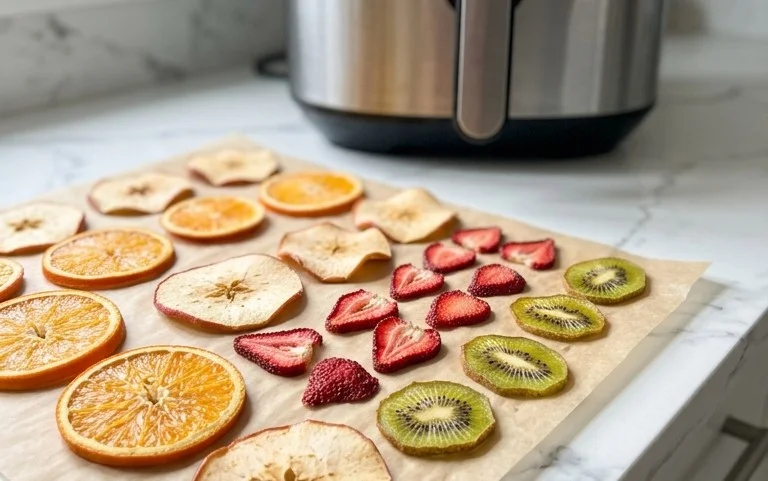
Ingredients:
- Fresh fruit of your choice (e.g., apples, bananas, strawberries, mangoes, pineapple)
- Optional: Pinch of cinnamon or other spices
How to Dehydrate Fruit in the Air Fryer
Dehydrating fruit in the air fryer is a fantastic way to preserve your harvest or simply enjoy delicious, chewy fruit snacks year-round. Unlike commercial dehydrators that can take hours upon hours, the air fryer offers a quicker, more accessible method for achieving that perfect chewy texture. I love making batches of dehydrated apples and bananas to snack on during the week, or adding them to yogurt and oatmeal. It’s surprisingly simple and requires very little active time.
Before you begin, it’s important to select your fruit wisely. Ripe, but not overripe, fruit works best. Overripe fruit can become mushy and hard to handle. Wash your fruit thoroughly and remove any stems, seeds, or pits as needed. For fruits like apples and pears, coring them before slicing is a good idea.
Preparing Your Fruit
The key to successful fruit dehydration, whether in an air fryer or a dehydrator, is consistent thickness. Aim for slices that are about 1/4 inch thick. This ensures they dry evenly. For fruits like strawberries, you can slice them in half or quarters depending on their size. Bananas can be sliced into rounds or lengthwise if you prefer. If you’re working with more delicate fruits like raspberries, you might want to dehydrate them whole or gently halved.
For citrus fruits like oranges or grapefruit, slice them thinly and remove as many seeds as possible. You can even remove the peel if you prefer a less bitter end product. Pineapple and mangoes should be peeled and cut into uniform pieces. If you’re feeling adventurous, you can experiment with different fruits, but always start with a small batch to see how your air fryer handles them.
Some fruits, like apples and bananas, can oxidize and turn brown when exposed to air. To prevent this, you can briefly soak them in a solution of 1 part lemon juice to 4 parts water for about 5 minutes. This will help maintain their color. Drain them well and pat them dry with a paper towel before proceeding.
If you’re adding any spices like cinnamon to your fruit, do it now. A light dusting is usually all you need to enhance the natural sweetness of the fruit without overpowering it.
Air Frying the Fruit
Phase 1: Initial Drying
Step 1: Arrange the Fruit
Place the fruit slices in a single layer in the air fryer basket. Make sure they do not overlap to ensure even airflow and drying. If your air fryer has racks, you can dehydrate more fruit. Overlapping pieces will steam rather than dehydrate, leading to uneven results and potentially mold growth. You might need to work in batches, depending on the size of your air fryer.
Step 2: Set the Temperature and Time
Preheat your air fryer to the lowest possible setting. Most air fryers have a dehydrate function, which is ideal, but if yours doesn’t, set it to around 150°F (65°C) or the lowest temperature it can go. The goal is to gently dry the fruit, not cook it. The initial drying time will vary depending on the fruit and its thickness, but a good starting point is 3-4 hours. Check your fruit every hour to gauge progress.
Phase 2: Monitoring and Flipping
Step 3: Check for Dryness and Flip
After the initial 3-4 hours, start checking your fruit. You’re looking for a leathery, pliable texture. The fruit should be dry to the touch but still have a slight chewiness. It shouldn’t be brittle or crispy. If the fruit is still too moist, continue air frying, checking every 30-60 minutes. Midway through the drying process (around the 2-hour mark), it’s a good idea to flip the fruit slices. This ensures both sides get adequate exposure to the warm air. If you notice any pieces drying much faster than others, you can remove them to prevent them from becoming too hard.
Step 4: Continue Drying as Needed
The total drying time can range from 4 to 12 hours, or even longer, depending on the fruit, its moisture content, the thickness of the slices, and your specific air fryer model. Thicker slices and fruits with higher water content will naturally take longer. Continue to check the fruit periodically, removing pieces as they reach your desired level of dryness. The fruit should feel leathery and slightly pliable. You should be able to bend a piece without it snapping, but it shouldn’t feel sticky or damp.
Phase 3: Cooling and Storage
Step 5: Cool Completely and Store
Once your fruit is dehydrated to your liking, remove the basket from the air fryer and let the fruit cool completely on a wire rack. This is a critical step; if you store the fruit while it’s still warm, condensation can form, leading to spoilage. Once completely cool, store the dehydrated fruit in an airtight container at room temperature. Properly dehydrated fruit can last for several weeks, or even months, if stored in a cool, dark place. To ensure maximum freshness, you can place a food-safe desiccant packet in the container, especially in humid environments.
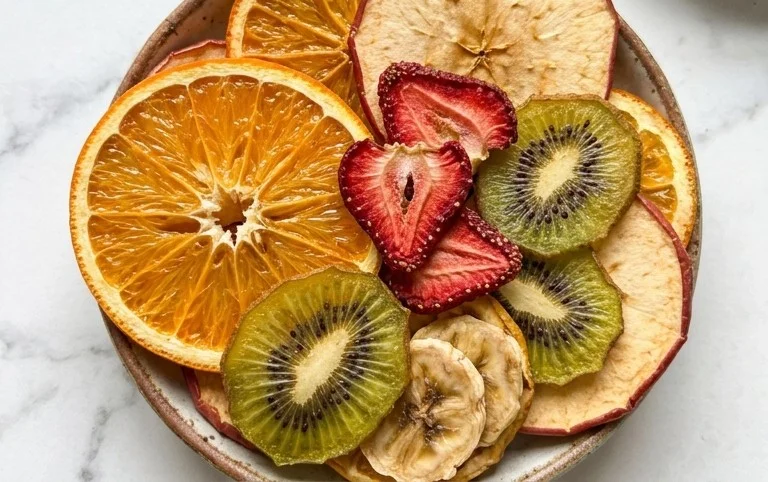
Conclusion:
Dehydrating fruit in your air fryer is a rewarding way to make your own healthy snacks and use up extra produce. The result is wonderfully chewy, naturally sweet fruit chips that are so much better than store-bought. I find myself making new batches every few weeks, especially with seasonal fruits. They are perfect for tossing into granola, packing into lunches, or just enjoying as a guilt-free treat. You can even experiment with different fruits like peaches, plums, or even grapes! Don’t be afraid to try adding a pinch of cinnamon or a sprinkle of nutmeg to fruits like apples and pears before dehydrating them for an extra flavor boost. Store your dehydrated fruit in airtight containers at room temperature for up to a few weeks, or in the refrigerator for longer storage. If they lose a bit of their chewiness, a short burst back in the air fryer can revive them.
What temperature should I use?
The ideal temperature for dehydrating fruit in most air fryers is between 130°F and 160°F (55°C to 70°C). If your air fryer has a specific dehydrate setting, use that. Otherwise, set it to the lowest temperature possible and experiment.
How long does it take to dehydrate fruit?
Drying times vary greatly depending on the fruit, its thickness, and your air fryer model. It can take anywhere from 4 to 12 hours. Check your fruit periodically, flipping slices every hour or two, and remove pieces as they become chewy and leathery.
Can I dehydrate citrus fruits?
Yes, citrus fruits like oranges and grapefruit can be dehydrated. Slice them thinly, about 1/8 inch, and you can leave the peel on. They make a lovely addition to water or tea, or can be candied for a special treat.
How to Dehydrate Fruit in the Air Fryer
Learn the simple steps to dehydrate your favorite fruits using an air fryer for healthy, homemade snacks. This method ensures even drying and preserves the natural sweetness of the fruit.
Ingredients
-
Assorted fresh fruit slices (e.g., apples, bananas, berries, peaches)
-
Paper towels
Instructions
-
Step 1
Wash and thoroughly dry your chosen fruit slices with paper towels. -
Step 2
Arrange the fruit slices in a single layer in the air fryer basket. Ensure they do not overlap to allow for even airflow and drying. -
Step 3
If your air fryer has racks, you can dehydrate more fruit by using the additional layers. Ensure each layer has adequate space. -
Step 4
Set your air fryer to the lowest possible temperature (usually around 135°F or 57°C) and the dehydrate setting or a very low fan speed for extended drying. -
Step 5
Dehydrate for 4-6 hours, flipping or rotating the fruit halfway through the process for even drying. The exact time will depend on the type and thickness of the fruit. -
Step 6
The fruit is dehydrated when it is leathery and pliable, with no moisture remaining. Let it cool completely before storing.
Important Information
Nutrition Facts (Per Serving)
It is important to consider this information as approximate and not to use it as definitive health advice.
Allergy Information
Please check ingredients for potential allergens and consult a health professional if in doubt.